


Creating Worlds Interview: Dylan Cole on His Career, Avatar, and His New Book
November 14th 2025
Whether it's a city of the future, or an alien planet, the incredible visuals behind the worlds in movies are built with the help of talented artists and their work. Behind some of cinema's biggest releases is industry veteran Dylan Cole, now the Production Designer on James Cameron's Avatar movies for Pandora. The next movie in the series, Avatar: Fire and Ash, is coming on December 19th, but not before he releases a look back at some of his earlier art in his upcoming artbook, Creating Worlds: The Disney and 20th Century Studios Cinematic Art of Dylan Cole!
The book is being published by Insight Editions (Titan Books in the UK) on November 18th and will showcase a collection of some of his best work, including never-before-seen pieces too. Ahead of its release, I had the privilege of speaking to Dylan himself about Creating Worlds, as well as his career, art, and his favourite books as a fellow collector. Enjoy my interview below, as well as preview pages from the new book.

Thanks for speaking with me about your new book, Creating Worlds! How are you feeling about it ahead of its release and how did it come about?
Cole: My pleasure! I am very excited to share it with the world; there is almost 20 years of work in it! I had been wanting to do an art book for quite a while, but gathering all the rights was a major roadblock since we don't own the work we do for films. After Disney bought 20th Century Fox, I realized a big chunk of my professional work was under one roof, so I thought it would be cool if I could have an official Disney book of my work. I casually asked our EVP of Franchise Development at Lightstorm, Josh Izzo, about that possibility and who to talk to, and within a week I was pitching Disney and a week after that, I had a deal and a publisher. It was crazy, from casual question to a book deal within a couple weeks. I am honored because Disney doesn’t do many books with contemporary artists, they focus on artists from the past, so it was a major vote of confidence to have them agree to do this.

You have had great success working in the industry and have contributed to huge movies, including Avatar and Alita: Battle Angel. What were some of the personal milestone moments of your early career, big or small, in the build up to getting to where you are now?
Cole: Starting with an internship at Industrial Light and Magic was huge while I was still at UCLA. I interned in the matte painting department in 2000. I had barely even touched a computer for art and got in based on my traditional painting, which was great. I didn’t learn a lot of techniques when I was up there, it was more just being exposed to it all. I got to see matte paintings by the best in the world and after that summer, I basically locked myself in my room and practiced until my work looked better.
Getting to work on Lord of the Rings was the big one. Fellowship of the Ring came out when I was in college, and I fell in love with it immediately and dreamt of working on it. I busted my butt on my first few jobs and got the gig for Return of the King at 23 years old. It was a pinch me moment for sure. I distinctly remember jumping up and down in the Rhythm and Hues parking lot on a misty evening in December of 2002 getting the news!
Fans of movies can pore over endless illustrations and concept art pieces online and in books, with more access to the work of artists than ever before. Is there a part of your job that you think isn’t highlighted though? Something most fans won’t realise or be aware of?
Cole: The art gets all the attention online, and especially the big pretty keyframe stuff, but as a production designer, the concept art is just the beginning of the process. There are sets to design in full to cover all angles, storytelling considerations, endless details to consider, construction methods, finishes, set decoration, greens, lighting, etc.
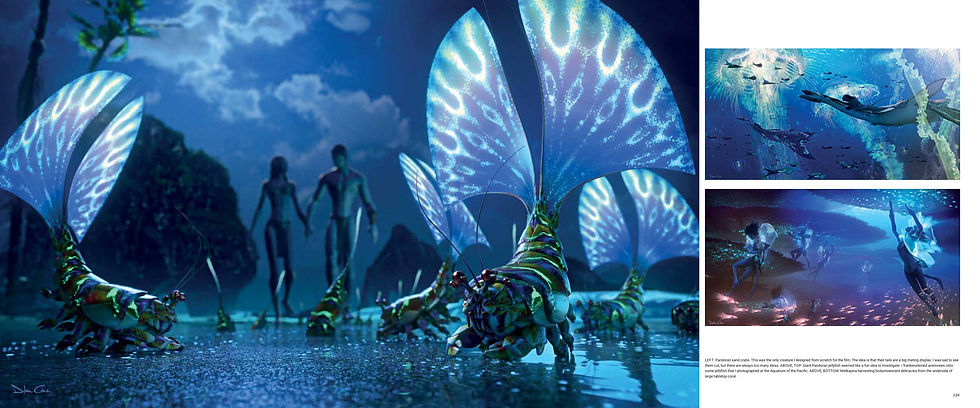
Your art and the world building you accomplish within a single image is always incredible. Creating images in any discipline is something that takes a lot of time and practice to improve. Aside from this, what else do you feel has helped improve your art most? Improved technology, working with others or something else?
Cole: Thank you! I try and think through the image and imply story wherever I can. That is what will make an image compelling. I had the benefit of learning a lot from Robert Stromberg. He is an absolute master at beautiful composition and storytelling. I am also super fortunate to have had Robert write the afterword to Creating Worlds.
Working with others is always huge. I am constantly learning from all the great artists I am fortunate enough to work with. I also have the fire to try to make every new image I do better than the last. I certainly haven’t succeeded, but it helps me continue to improve. I also look at a lot of things besides concept art. Other concept art is probably the last thing I look at, a lot of it can be quite derivative these days. I am always referring to nature and great traditional painters of the past and present. I have been in love with the Hudson River School of artists like Bierstadt and Church. I wear that influence on my sleeve in a lot of my work.
Avatar: Fire and Ash is undoubtedly going to be one of the biggest releases this year. As a production designer on the movie, I wanted to ask about the concept art that has been publicly released, which includes your own. It’s unusual for a movie to be promoted with artwork like this, so it’s clear that the work you and fellow artists do is held in high regard. What do you think of this approach for marketing and promotion?
Cole: I think it is incredibly gratifying and speaks to how Jim and Lightstorm value our art and designs. I also think a piece of concept art can often evoke more of a feeling of the world that a movie still can. The movie still shows a very specific moment, often in the middle of a moving shot, where in contrast the art can be broader and encapsulate the whole shot or scene, perfectly in focus, leading eye around the image. It’s kind of like how good poster art can encapsulate a film. Concept art can do that for a set or scene.

From getting a job and starting to work on ideas, to getting a design approved and seeing it on the big screen, what is the biggest pay off for you personally when working on a movie?
Cole: I enjoy all the stages. I enjoy the sense of discovery- finding a design direction with the team that I am excited about, thinking it solves the problems and hoping the director agrees.
I also love the part where the set is working- when it is being shot on or captured on. You have done your job and movie making is happening. I like seeing a director like Jim elevate and use my sets in ways that I wouldn’t expect. And conversely, I like when he finds the angles that were my favorites and shoots them the way I was hoping. It is all a big ride and surprise.
Creating Worlds: The Disney and 20th Century Studios Cinematic Art of Dylan Cole will be a showcase of your work across multiple movies and includes your insights too. What were your goals for the book and did they change as you worked on it?
Cole: My goals were first and foremost to show a lot of my art as big and cleanly as possible, preserving my intended aspect ratios and show the art in an uncluttered way. I wanted this to be an art book, not an “art of” book. I think of ‘art of” books as more cluttered with lots of small images, trying to cram as much as possible onto a page. In my book, I have a lot of double page spreads and most pages have just single images on a page so they can breathe and be appreciated. Those goals stayed the same throughout and I am happy with the final product.

What was the experience of going through your past work and writing about it for the book like?
Cole: It was definitely a trip down memory lane. It was particularly fun to get a bunch of my childhood artwork from my mom and to go digging through my garage for my younger stuff.
As for older professional work, it was shocking to see how much I have grown and improved as an artist and I talk about that a bit in the text. It took a lot of restraint not to go back and touch up or rework old pieces. There were several times in my career where I feel my worked jumped in quality. The first was on Alice in Wonderland, the second was on Maleficent.
Writing about it was a challenge because there was just too much to talk about. First and foremost, it is an art book and not an autobiography so that was a helpful thing to remember. I also wrote the book in first person in my voice and I wanted it to sound like me. I enjoyed being able to share little insights and stories about particular pieces.
I also had the surprising experience of finding paintings I had completely forgotten I had done! Most were forgotten for a reason, but there were a couple pleasant surprises that I was proud to show.
The book will feature your art for movies from Disney and 20th Century Studios, so I’m curious as to what it’s like working with them from a curation perspective. What was involved in choosing what to include and how much input did they have?
Cole: Overall, it was pretty smooth, there were a few things from earlier films I wasn’t able to show and a few things with likeness rights, but that is usual. As for which specific images, I got to show whatever I wanted. I was working with Insight Editions, who published it, and then Disney would just approve it mainly from a legal standpoint, not a creative one. I was extremely hands on with the layout and selection of images. I am incredibly fortunate and grateful because I was able to show work that hasn’t been released before.

Fans have a lot to look forward to in Creating Worlds, including a foreword from James Cameron himself! Are there any pieces of art or features in particular you are excited for people to see?
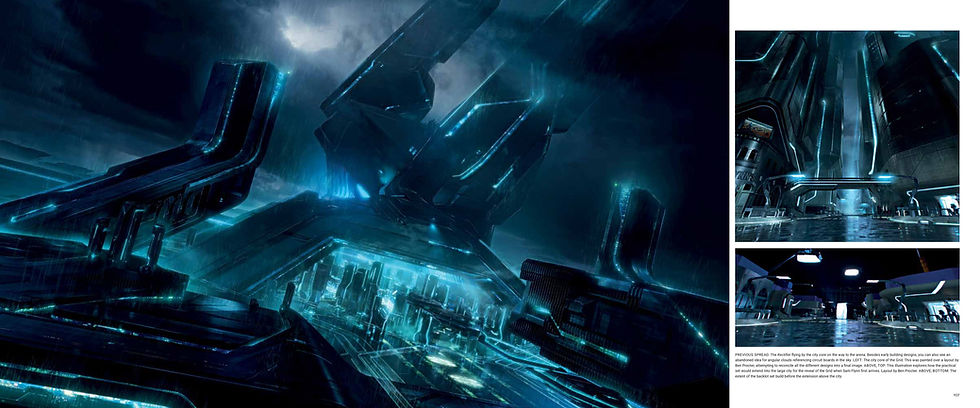
Cole: I am excited to show a lot of art that hasn’t been released, in particular for scenes that were cut from Avatar: The Way of Water. I am also really excited about the Imagineering chapter which includes a lot of recent work for the Disney California Adventure expansion. I am mainly just excited to show the variety. I like the contrast of the sleek futurism of Tron: Legacy to the organic wonder of Avatar, to the layered textures of Alita: Battle Angel.
People will also get a glimpse into my process as I break down a few paintings and discuss the steps in my workflow.
The artbook market has been strong for many years now and there doesn’t seem to be any indication that will change in the short term. Big studios and publishers frequently reveal books and others, including artists themselves, are finding success on crowdfunding platforms like Kickstarter. As someone that has had art featured in multiple publications and a new one of your own coming, what do you think the future is for artbooks?
Cole: I think all of those avenues are viable and important. Each has their own ups and downs. I think the important thing is to get the art out there and in people’s hands. I am a GIANT collector of art books, and I am just thrilled to be part of the game.
I hope the younger generations continue to enjoy art books and not just rely on social media on their phones for looking at art. The experience of flipping through a book of large, beautiful images is incomparable. The detail, slower pace, and tactile reality of a book is incredibly important.
I’m the nerd that will giddily sit by myself late on a Saturday night with a glass of wine and a big art book on the coffee table and just slowly flip through and enjoy.
Of course, I have to ask about your own collection! What kind of artbooks do you buy and what are some of your personal favourites?
Cole: Wow, yeah… I have a pretty big collection to say the least! I have been buying them for the last 30 years. They range all over from film art books to fine art books, to making of books, modern and classic illustrators, game art books, landscapes, instructional… you name it!
As for favorites, that is tough!!! The Invisible Art by Craig Barron and Mark Cotta Vaz about the history of matte painting is a personal favorite. The Art of Star Wars books for the original trilogy were massively formative for me and paved the way for what I wanted to do in my career.
John Berkey and John Harris are heroes of mine and I frequently return to their books. I also love traditional painting and drawing and my friend, Jeremy Mann, has some of the best books you’ve ever seen.
I have also recently really enjoyed the Gallery Editions (each publisher has a different name) of comic art where the original art is printed at one to one scale. The ones for Batman: Year one and The Killing Joke were recent purchases I have loved.

To end the interview, let people know what you have going on right now and where they can find and support you!
Cole: It is a very busy and exciting time with the release of the Creating Worlds followed closely by the release of Avatar: Fire and Ash. I am busy working with imagineering on Avatar attractions and gearing up for Avatar 4 and 5.
You can find me at-
@dylancoleart on Instagram and X
A huge thank you to Dylan Cole for taking the time to do this interview! Creating Worlds: The Disney and 20th Century Studios Cinematic Art of Dylan Cole is coming out November 18th from Insight Editions and November 30th in the UK from Titan Books. The previews above are just a small taste of what to expect in the 296-page book and be sure to visit Dylan Cole's website to discover more of his art.
If interested, you can order the book for your own collection here;


Comments